
There weren’t many investments to lose money in 2025, but one area that succeeded in doing so was cryptocurrencies. Is now the time to rotate out of the group, and if so, where else could investors look?
“Rule No. 1: Never lose money. Rule No. 2: Never forget Rule No. 1.” — Warren Buffett
There weren’t many investments to lose money in 2025, but one area that succeeded in doing so was cryptocurrencies. Bitcoin ($BTC) is easily the biggest name in the cryptocurrency space, and even it hasn’t been immune to the group’s weakness. Bitcoin reached a high of X in October of last year, but it’s fallen nearly 40% from its peak, and it is currently trading below $80k. Looking at its PnF chart, Bitcoin moved to a sell signal for the first time since March after breaking a double bottom at $77k. Many investors own a fund equivalent of Bitcoin, and none is more popular than the iShares Bitcoin Trust ETF (IBIT). IBIT moved to a negative trend in November, and it now lacks near- and long-term market relative strength. Consequently, it holds an extremely weak fund score of 0.61, in addition to a negative score direction of 5.31, highlighting its sharp decline over the last few months.

Bitcoin hasn’t been the only name moving lower. In fact, most altcoins like Ethereum ($ETH) have seen even greater declines. Out of the seven members of the Nasdaq Crypto Index (.NCI), six of them are down more than 50% from their 2025 highs, with the average decline sitting at 60.3%. This broad-based decline within the cryptocurrency market has seen participation take a massive hit. Currently, none of the seven NCI constituents trades on a buy signal, while Bitcoin is the only name to trade in a positive trend. Additionally, five of the seven coins trade on at least four consecutive sell signals. If the asset class were to see a rebound in strength, it would likely need help from more than just Bitcoin, which is far from the case currently. That said, most crypto names are in oversold territory, so they could see some reversal over the next couple of weeks.
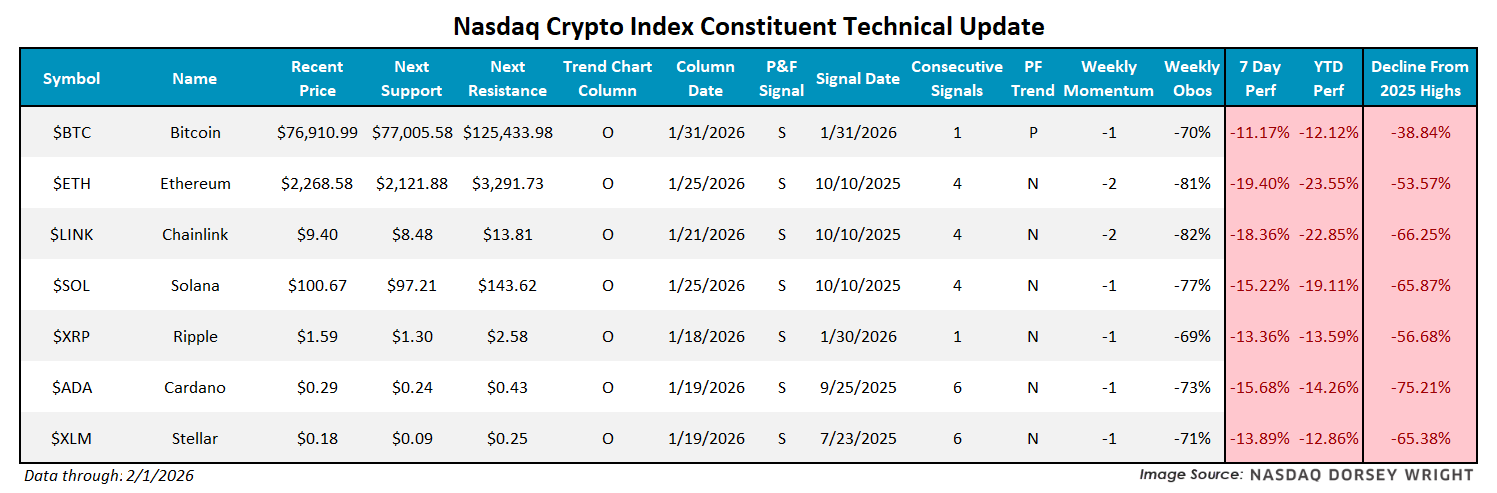
Crypto investors often praise the group’s its diversification benefits and upside potential. However, the group currently lacks the strength it typically displays during rallies. Those looking to maintain a personal touch with portfolios could pivot away from crypto and instead look towards other alternative assets for similar benefits.
Among the different areas that are more isolated from the market, commodities have been among the strongest this year, buoyed by a rebound in energy commodities and continued strength from metals. The iPath Bloomberg Commodity Index Total Return ETN (DJP) was up as much as 14% this year, placing the group in overbought territory. However, sharp pullback within commodities over the last several days has seen DJP return to actionable territory around the middle of its ten-week trading band. For the time being, DJP continues to demonstrate strength with an extremely solid fund score of 5.41, making it an alternative replacement for those looking to rotate out of crypto. A similar case could be made for precious metals, but the group has recently experienced heightened volatility, as we mentioned in today’s other article.
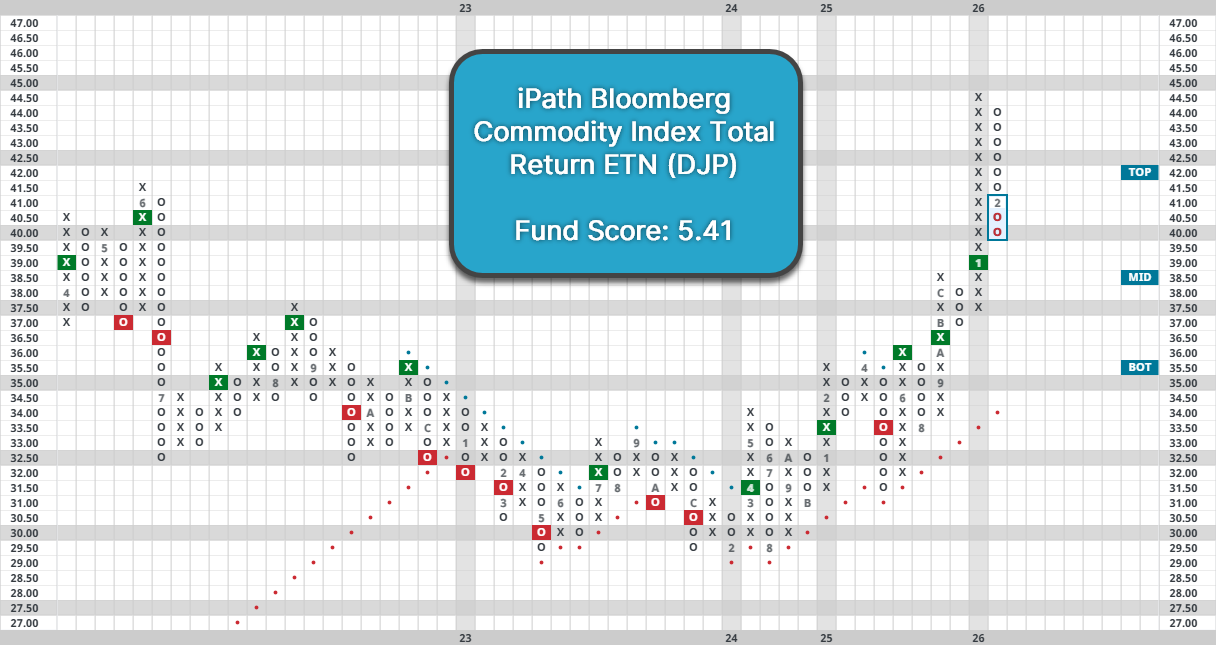
Overall, the broader cryptocurrency space continues to demonstrate a lack of relative strength. However, crypto can change on a moment’s notice, and it will likely regain strength at another point in time. Those looking to keep an eye out for a return to favor should watch several “greenlight” metrics. Today, we look most closely at the bitcoin bogey check, but fund scores, moving averages, and bull/bear markets can also provide further context, as we’ve mentioned before. For those unfamiliar, the bogey places an asset on an RS chart versus cash (MNYMKT), and the security passes when demonstrating near-term strength by sitting in a column of Xs on the RS chart. Meanwhile, periods of flight to safety marked by a column of Os versus MNYMKT often see near-term weakness and increased volatility. Applying this same concept to cryptocurrencies gives us a short-term view into whether the group might be back on solid footing. Most of Bitcoin’s gains since 2011 have come when it passes the bogey check, making that RS chart one to monitor for potential reversals and subsequent improvement.

