
Whether you’ve had a productive year investing in 2026 depends almost entirely on whether you own energy and technology stocks. However, as the saying goes, the taller they are, the harder they fall. While both sectors display significant long-term strength, there is at least one major argument against each group.
Whether you’ve had a productive year investing in 2026 depends almost entirely on whether you own energy and technology stocks. Technology fund XLK is up 23% YTD, while energy fund XLE is up 33.8%. The next closest sector after them, Real Estate (XLRE), is more than 13% behind tech, with a barely double-digit return of 10.1%. The outperformance of these two sectors has led to a notable uptick in relative strength. However, as the saying goes, the taller they are, the harder they fall. While both sectors display significant long-term strength, there is at least one major argument against each group.
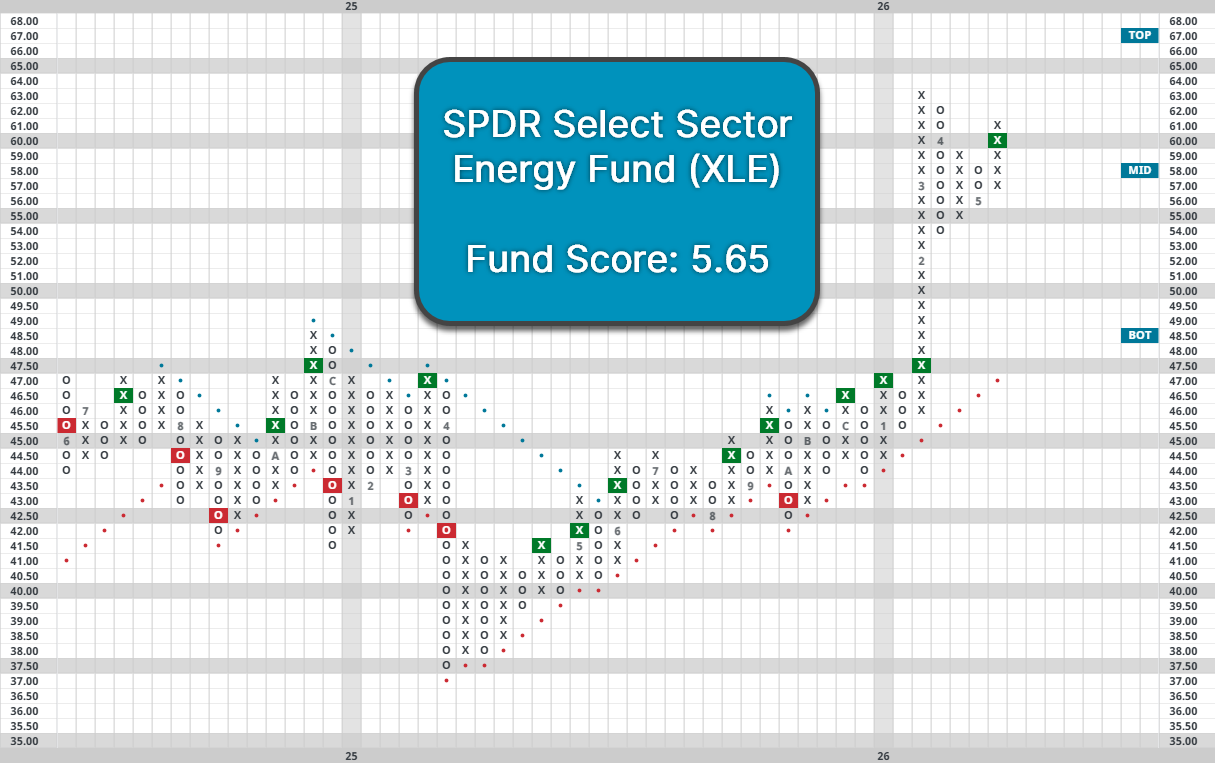
Energy has been a major beneficiary of rising crude oil prices this year, with the sector climbing to first place in DALI with a signal count of 240. Looking at XLE, it holds an extremely strong fund score of 5.65 after breaking out earlier this year. While the sector pulled back in April, it completed a bullish catapult and regained near-term market relative strength versus SPXEWI over the last week. However, energy typically moves in conjunction with oil, and a resolution of the Iran conflict could cause a sizable drop in prices, which would be a significant blow to the sector. Conversely, escalation could drive prices even higher, serving as an additional tailwind. Either way, uncertainty surrounding conflict will likely lead to higher volatility in the sector, but its relative strength is holding up for now.
Technology has been the other major leader, but despite its strength, many investors remain concerned. Technology currently holds the second spot in DALI with an impressive signal count of 226. The sector has rallied sharply from its March lows, leaving XLK on a steep column of Xs before finding support at $172. It now has a near-perfect fund score of 5.79 but remains heavily overbought, trading above the top of its 10-week trading band. Despite the sector’s long-term strength, it wouldn’t be surprising to see the group cool off or pull back over the next month.

Despite concerns about both sectors, each continues to exhibit historic levels of long-term strength. Both sectors currently have over 225 signals within DALI, and there’s only been a seventeen instances in which one sector has held that much strength, let alone two. In order for a sector reach that many signals, there has to be a major underlying theme driving the move, and previous instances can help indicate whether those trends are likely to persist or fade.
Interestingly, five of those occasions have come from tech while four have come from energy. Energy is the least correlated sector to the broader market, and its performance is often more driven by oil prices than by equities, making it less impacted during broader downturns. As a result, it can rise to the top from either a sharp increase in oil prices, weakness within other equities, or both. Previous instances of extreme energy leadership have occurred around bearish periods, with the sector averaging a 20% decline over the following year after first reaching 225 signals, while the broader market performed slightly better. However, this environment is unique in that technology is right behind energy. In other bearish periods, defensive or commodity-linked sectors held second place, suggesting that the current environment may be driven more by oil strength than by equity weakness, similar to 2005.

Meanwhile, technology tends to deliver the most upside in rising markets, so tech-driven leadership is typically a sign of market strength. The other four instances of extreme tech leadership support this view, with XLK averaging a strong one-year return of 20%. Additionally, leadership from other risk-on sectors such as consumer discretionary and communication services resulted in similarly strong performances, exceeding double-digit gains over the following While current market leadership may raise some concerns, there are always reasons for caution, and relative strength continues to support the leadership of the two sectors. With technology in the driver’s seat, concerns associated with past energy-led environments may largely be set aside, especially as the broader domestic equities market remains strong.
