Three of the FSM models saw an increase in international equity exposure after the seasonal quarter evaluation earlier this week.
The beginning of this week brought about the market seasonality shift, as we have covered throughout the Daily Equity Report over the past few days. This shift occurs as we enter the “seasonally strong” market period, which begins in November and runs through April. The “seasonally weak” period for domestic equity markets begins in May and runs through October, giving us the market adage of “sell in May and go away.” While we have a variety of models that focus on changing allocation at these two points specifically, the market seasonality shift also brings about evaluations to the Fund Score Method (FSM) models that are evaluated at each seasonal quarter, taking place at the beginning of February, May, August, and November. Note that the FSM models are only available to users that subscribe to the Enhanced Security Selection (ESS) package. In order to take a free trial of the ESS package, please reach out to our sales team at (212) 312 - 0333.
These latest evaluations saw trades in many of the models, as the continued upside we have seen from domestic equity markets over the past few months led to higher scores from risk-on areas in the model inventories. Today, we will review recent additions to the FSM American Funds 5S PR4050, FSM Vanguard 5S PR4050, and FSM T Rowe Price 5S PR4050 models in light of the recent evaluations.
The American Funds 5S and Vanguard 5S models each sold their last bond fund that remained from the COVID-induced market volatility, making each model fully focused on equity exposure. Interestingly enough, we saw the American Funds model purchase the American Funds Europacific Growth fund AEPGX, as the next highest scoring fund that the model did not already own. This is the first time the American Funds lineup has had an international specific fund included as a model holding since February of 2018.
The Vanguard model saw the Vanguard Diversified Equity fund VDEQX move in as a model holding, rounding out the other equity growth-focused funds that were already included in the model holdings. This model had already purchased a foreign equity fund in the Vanguard International Growth fund VWIGX at the last evaluation in August, giving it a similar makeup to the American Funds lineup from a broad perspective through an overweight toward domestic growth with international inclusion. Another notable point is that the typically more risk-averse American Funds actually has a higher allocation to international equity areas with the other model holdings.

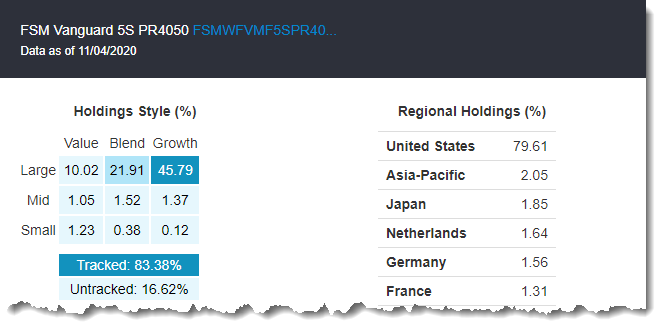
The largest change of the three models we will examine today came in the FSM T Rowe Price 5S PR4050 model, which saw three new funds added to the model holdings. This included the T Rowe Price Japan fund PRJPX, T Rowe Price Global Technology fund PRGTX, and the T Rowe Price Science & Tech. fund PRSCX. Each of the five funds now held in the model has at least partial exposure toward international equities. This leaves the model with about even exposure between US equities and non-US equities, which have allocations of 45% and 43%, respectively.
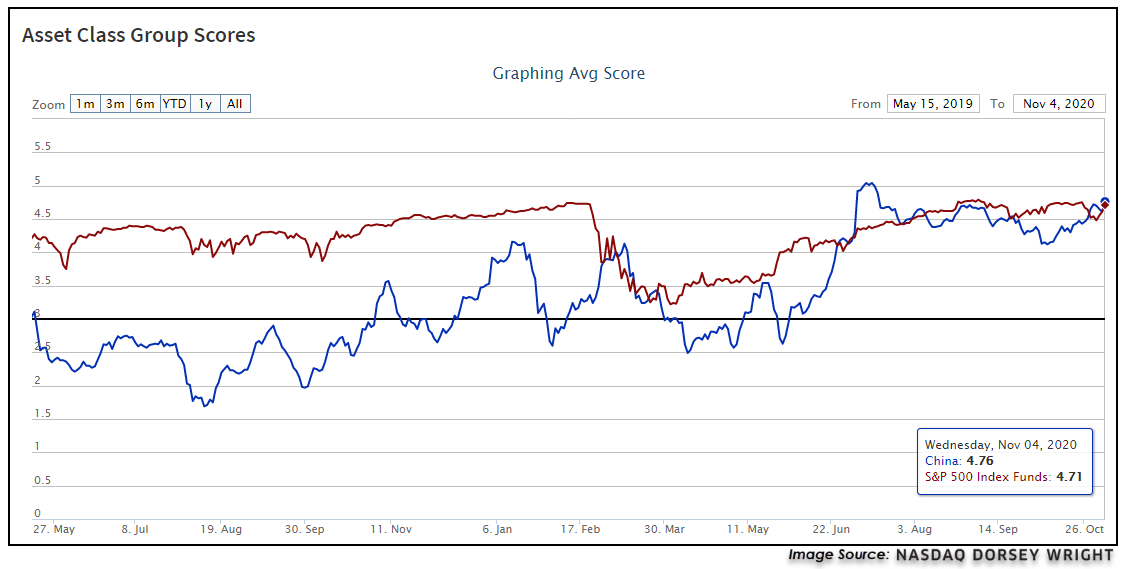
While the influx of international equity into these FSM models may seem surprising, a closer look at the Asset Class Group Scores rankings may help these moves make more sense. In looking at the US & non-US view filters together, we can see that the top end of the rankings still has more domestic representatives than international, but the international camp has improved drastically over the past few months. China, the largest single country represented across most emerging market-specific and international growth funds, recently overtook the S&P 500 Index Funds group, our core equity market representative, with a group score of 4.76 compared to 4.71. Although both of these groups have maintained relatively high score positions since June of this year, the China group has been unable to hold a higher position than the core US group for more than a few days at a time. This relationship will certainly be worth monitoring for further improvement from the leader among international equity markets.